

History of Naadam
From military training of the khans' warriors to a UNESCO-inscribed national festival — eight centuries of the three games.
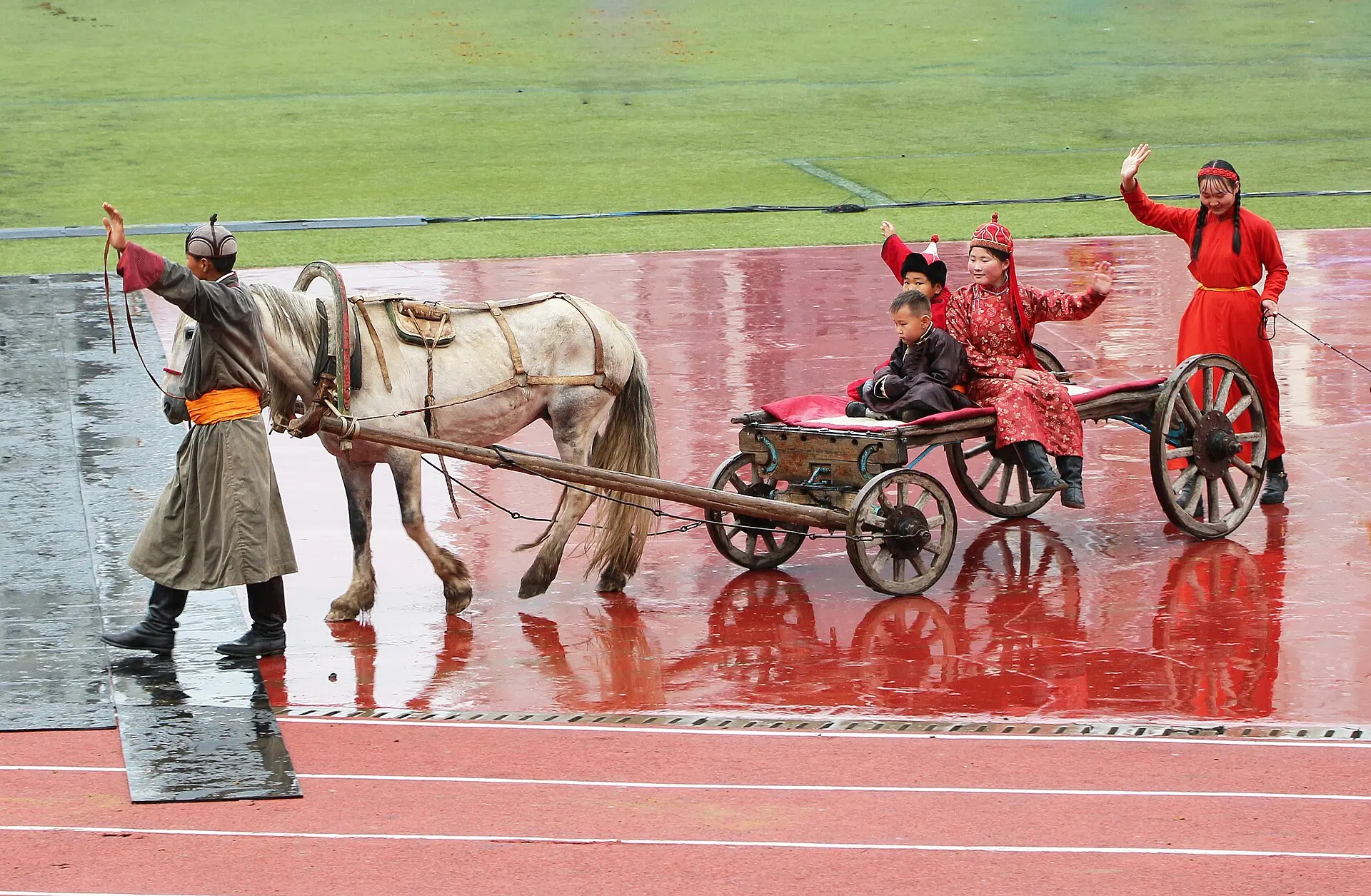
Naadam grew out of the military traditions of the Mongol Empire. Commanders selected warriors by testing the three skills every soldier needed on the steppe: strength and balance in wrestling, horsemanship over long distances, and precision with the bow. Organized contests of these 'three games of men' — Eriin Gurvan Naadam — accompanied state assemblies, weddings and religious gatherings for centuries.
Under Qing rule from the 17th to the early 20th century the great assemblies were restricted, but Mongolians kept the games alive in smaller local festivals tied to the worship of sacred mountains and ovoo cairns. When the People's Revolution of 1921 restored Mongolian statehood, the games were fixed on its anniversary — 11 July — and Naadam became the national holiday it is today.
The modern national Naadam is held every 11–13 July in Ulaanbaatar, opening with a ceremony of the Nine White Banners at the National Sports Stadium. In 2010 UNESCO inscribed Naadam on the Representative List of the Intangible Cultural Heritage of Humanity, recognizing not only the three games but the long song, khöömii overtone singing, bie biyelgee dance and morin khuur fiddle woven through the festival.
Naadam is not a show staged for visitors — it is Mongolia's own celebration of statehood and nomadic identity, celebrated in every aimag and soum across the country. That is exactly what makes it worth travelling for.
Continue reading
Mongolian wrestling — bökh
512 wrestlers, nine elimination rounds, no weight classes, no time limit. The eagle dance, the zodog and shuudag, and titles that follow a man for life.
Read more →Horse racing at Khui Doloon Khudag
Not a racetrack — the open steppe. Races of 12 to 26 km, thousands of horses, and the giingoo song of young riders at dawn.
Read more →Mongolian archery
Three traditions — Khalkh, Buriad, Uriankhai — one composite bow, and judges who sing the score.
Read more →Planning your trip?
Discover Mongolia Travel puts together Naadam packages with guaranteed opening-ceremony seats. Tell us your dates.